


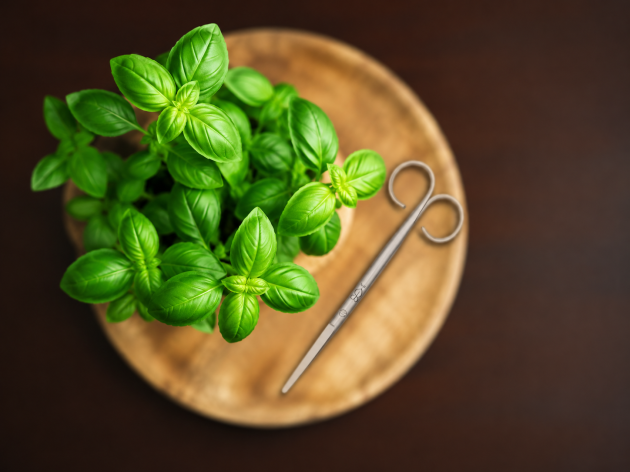

Where should you cut basil to encourage bushier growth? Will chives grow back after cutting? And why is it better to use sharp scissors rather than pulling off the leaves? In this guide, we explain how to care for your indoor herb garden so you can enjoy fresh herbs for as long as possible.
Windowsill Herbs – Which Varieties Should You Grow in Your Kitchen?
You don’t need a garden or even a balcony to enjoy home-grown herbs. Many popular varieties thrive in pots, provided they receive enough light, suitable compost and regular care.
Which Herbs Grow Best on a Kitchen Windowsill?
- Basil – loves warmth and sunshine. Regular pruning encourages it to branch out and produce more fragrant leaves.
- Mint – relatively easy to grow, fast-growing and well suited to frequent harvesting. Keep it in its own pot, as it tends to spread vigorously.
- Chives – a great choice for beginners. When cut correctly, they soon produce fresh growth.
- Flat-leaf or curly parsley – prefers a bright position and moderately moist compost. You can harvest its outer stems gradually.
- Thyme and oregano – thrive in sunny spots and generally need less frequent watering than mint or basil.
- Rosemary – requires plenty of light and free-draining soil. It grows more slowly, but with proper care, it can remain productive for a long time.
You could also try growing coriander, dill or lemon balm. Just remember that different herbs have different requirements, so planting them all together in one container may not work particularly well. Thyme, for example, tolerates slightly dry soil much better than basil, which can start wilting quickly when it lacks water.
If you’re just getting started, choose two or three herbs that you regularly use in your cooking. This makes it easier to understand their individual needs and develop a good care routine.
How to Grow Healthy Herbs Indoors
Even the best pruning technique won’t help much if your herbs don’t have suitable growing conditions. To give them the best chance of recovering after each harvest, pay attention to a few basic requirements.
Where Should You Position Herbs in Your Kitchen?
Most popular culinary herbs need plenty of natural light. A bright windowsill is therefore a good choice, ideally near a south-, east- or west-facing window.
- Basil, rosemary and thyme particularly enjoy sunny positions.
- Mint and parsley can also cope with slightly lower light levels.
A word of caution: During summer, keep an eye on plants placed near south-facing windows. Temperatures behind the glass can rise considerably, causing the compost in small pots to dry out quickly. Without enough water, your indoor herb garden may suffer.
Temperature matters, too. Avoid placing herbs directly beside a hot radiator or exposing them to cold draughts. Basil is particularly sensitive to sudden drops in temperature.
Which Pots and Compost Are Best for Growing Herbs?
The most important thing is to choose pots with drainage holes. Without them, excess water can collect around the roots and eventually cause root rot.
Most herbs grow well in light, free-draining compost designed for houseplants or culinary herbs. For Mediterranean varieties such as thyme and rosemary, you can improve drainage and aeration by mixing in a little perlite.
How Often Should You Water Windowsill Herbs?
There is no single watering schedule that suits every herb. The amount of water a plant needs depends on its species, the size of its pot, the room temperature and the amount of sunlight it receives.
The simplest method is to check the compost with your finger. If the top layer feels slightly dry, it may be time to water. Basil, mint and chives generally prefer more consistent moisture, while thyme and oregano benefit from allowing the compost to dry out slightly between waterings.
Remember to empty any excess water from the saucer beneath the pot. Leaving the roots sitting in water for long periods can damage the plant.
How to Prune Herbs on a Windowsill Correctly
Before harvesting, check that your plants are healthy and have enough foliage to continue growing. Give young seedlings time to develop a stronger root system. Newly repotted herbs may also need a short break from harvesting while they settle into their new containers.
Follow these simple guidelines when pruning your herbs:
- Use clean, sharp scissors. The blades should cut through stems smoothly, without crushing or tearing them.
- Choose the right cutting point. For herbs such as basil and mint, it’s usually best to trim the growing tips just above a pair of leaves.
- Avoid removing too much growth at once. When harvesting regularly, start with small amounts. For many established perennial herbs, leaving at least two-thirds of the green growth intact is a useful general guideline.
- Pay attention to how quickly your herbs recover. Plants grow faster when they receive sufficient light and warmth. During winter, regrowth can be much slower.
- Remove damaged or dead growth. Leaving unhealthy plant material in place can encourage mould and other problems.
Whenever possible, use freshly harvested herbs straight away. Their flavour and aroma are often at their best just after cutting.
Why Are Sharp Herb Scissors Important?
The delicate stems of basil, mint and young oregano are easily damaged during harvesting. Blunt scissors may crush or tear plant tissue instead of making a clean cut. This can leave ragged edges, increasing the risk of the affected area drying out or developing problems.
Well-sharpened herb scissors allow you to make quick, clean and accurate cuts while minimising unnecessary damage to the plant. This helps create better conditions for healthy regrowth after harvesting. Good scissors also make it easier to reach individual stems without disturbing the surrounding leaves.
Further reading: How to Prune a Bonsai Tree
How to Prune Different Herbs to Encourage Healthy Regrowth
Although many herbs respond well to regular harvesting, they shouldn’t all be cut in the same way. Here’s a practical guide to pruning some of the most popular varieties grown on kitchen windowsills.
| Herb | How should you prune it? | What should you remember? |
| Basil | Cut the growing tips a few millimetres above the second or third pair of leaves. | Regular pruning encourages branching. Remove flower buds if you want to focus on leaf production. |
| Mint | Trim young shoots just above a pair of leaves. Shorten longer stems gradually. | Harvest smaller amounts during winter to avoid weakening the plant. |
| Chives | Cut the leaves with scissors a few centimetres above soil level. | Avoid cutting back the entire clump of a young plant. Leave some healthy leaves intact. |
| Parsley | Cut whole outer stems close to their base. | Leave the younger leaves in the centre of the plant so they can continue developing. |
| Rosemary | Lightly trim the young, green sections of the stems. | Avoid cutting into old, woody growth, as it may not produce new shoots. |
| Thyme | Snip the young, leafy tips of the stems. | Avoid cutting heavily into woody stems that no longer have leaves. |
| Oregano | Cut young shoots just above a point where new branches can develop. | Moderate, regular pruning encourages a fuller, bushier plant. |
| Coriander | Harvest a few outer leaves or stems at a time. | Leave the centre of the plant intact. Sow new batches of seeds regularly for a continuous supply. |
The main rule: Most herbs respond better to frequent, light harvesting than to being cut back heavily all at once. Always adjust your approach to the species and how quickly the plant is growing.
Which Herb Scissors Should You Choose?
For pruning living herbs in pots, a conventional pair of scissors with two precise cutting blades is generally the better choice. This design allows you to reach individual stems without accidentally damaging neighbouring shoots.
What should you look for when choosing herb scissors?
- What should you look for when choosing herb scissors?
- Sharp blades – the scissors should cut through delicate stems smoothly, without crushing them.
- Precise tips – particularly useful when reaching into dense foliage to select a specific stem.
- Comfortable handles – help you maintain control and make accurate cuts.
Durable materials – stainless steel is particularly practical in the kitchen because it resists corrosion and is easy to clean.
If you’re looking for a versatile tool for trimming home-grown herbs and handling other everyday household tasks, consider Renomed’s universal scissors.
Our US1 Universal Scissorsfeature straight, 4 cm blades with pointed tips. Their design makes it easier to reach individual stems and make accurate cuts among densely growing herbs. They’re particularly useful when shaping basil, mint or oregano, where choosing the right cutting point matters.
The US2 Universal Scissors, meanwhile, have straight, 4.5 cm blades with rounded tips. This reduces the risk of accidentally pricking yourself or catching surrounding foliage. They’re a practical option for everyday harvesting of chives, parsley and other delicate herbs.
Both models are handcrafted from stainless steel, with blades that are carefully ground, sharpened and adjusted. This ensures precise cutting performance, even when working with slightly tougher herb stems.
The corrosion-resistant material also makes the scissors easy to wash and suitable for disinfection, helping you maintain good hygiene when caring for your kitchen herb garden.
You may also be interested in: What Scissors Should You Buy for a First Aid Kit, and What Are They Used For?
How to Care for Windowsill Herbs – Regular Pruning Makes a Difference
Growing your own herbs in the kitchen doesn’t require specialist gardening skills. Regular harvesting gives you fresh ingredients for your favourite dishes and, for many varieties, helps maintain healthy, compact growth. It’s also worth paying attention to the tools you use. Sharp scissors reduce unnecessary damage to delicate stems and help your plants recover after pruning.
If you’re looking for a practical tool for everyday plant care, kitchen tasks and more, explore the Renomed Universal collection.
